WHAT'S INSIDE
- Real-World Context: Explore how personality traits and subtle behaviors shape first impressions in everyday social and professional situations.
- Watching & Discussion: Analyze a clip from Friends to to see what kind of first impression Chandler makes and watch street interviews to discover what people notice first when meeting someone new.
- Vocabulary Focus: Learn how to describe personality, impressions, and body language using adjectives (genuine, approachable, arrogant, etc.) and expressions like come off as… or appear to be….
- Guided Practice: Complete matching and gap-fill activities to reinforce vocabulary, discuss scenarios, and describe how people come across in everyday interactions.
- Personal Reflection: Participate in reflective discussions about your own personality, first impressions, and the traits you value or dislike in others.
Related Lessons
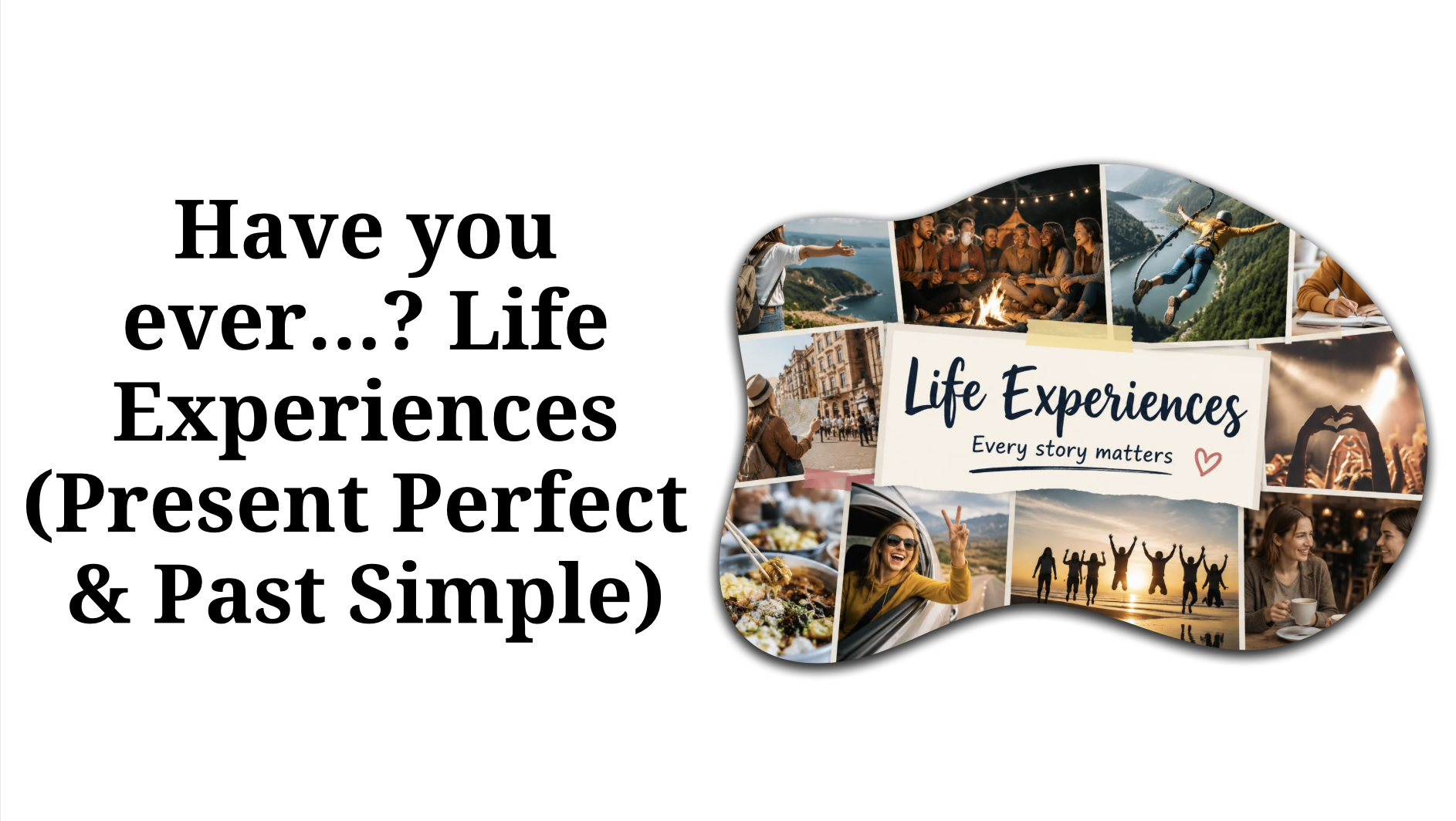
Turn everyday experiences into engaging conversation practice! Explore the difference between Present Perfect and Past Simple through a “Have you ever…?” experience challenge, analyse a dialogue between two contrasting personalities, and practise asking follow-up questions to uncover more details. With speaking tasks, real-life reactions, and personalised storytelling, learners build the confidence to talk about their life experiences naturally and fluently.
FREE
Explore how different generations view work, effort, and loyalty in today’s workplace. Engage with authentic videos and comments about Gen Z and changing work expectations. Practise idiomatic expressions. Through discussions, debates, and roleplays, learners critically explore whether younger employees are “entitled” or simply reacting to a changing labour market shaped by layoffs, insecurity, and shifting values.
FREE
Explore a controversial UK public health law and what it reveals about freedom, responsibility, and government control. Students watch a BBC News report on the new smoking ban, analyse its aims and implications, and debate whether such policies protect society or go too far. Along the way, they master advanced vocabulary (crack down on, turn a blind eye to, take a toll on, etc.) before putting it all into action in a dynamic roleplay and debate.