WHAT'S INSIDE
- Real-World Context: Learn how people naturally make excuses, refuse invitations, and cancel plans in everyday social, work, and personal situations.
- Vocabulary Focus: Practise high-frequency excuse phrases used in spoken English (e.g. I’m running late — I got held up at work, I’m not really up for it, It’s a bit of a hassle to get there, I’ve got a lot on my plate).
- Watching: Watch a video on excuses for being late to work to decode believability, tone, and cultural appropriateness in professional settings.
- Guided Practice: Complete matching, gap-fill, and “choose the most natural option” tasks to understand when and why different excuses are used in context.
- Fluency Building: Take part in role-plays, response drills, and real-life scenario simulations (social plans, work pressure, lateness, and cancellations) to practise using excuses.
- Social Awareness: Develop awareness of how to refuse politely in English, balance honesty with social politeness, and understand when vague excuses are more appropriate than direct refusals.
Related Lessons
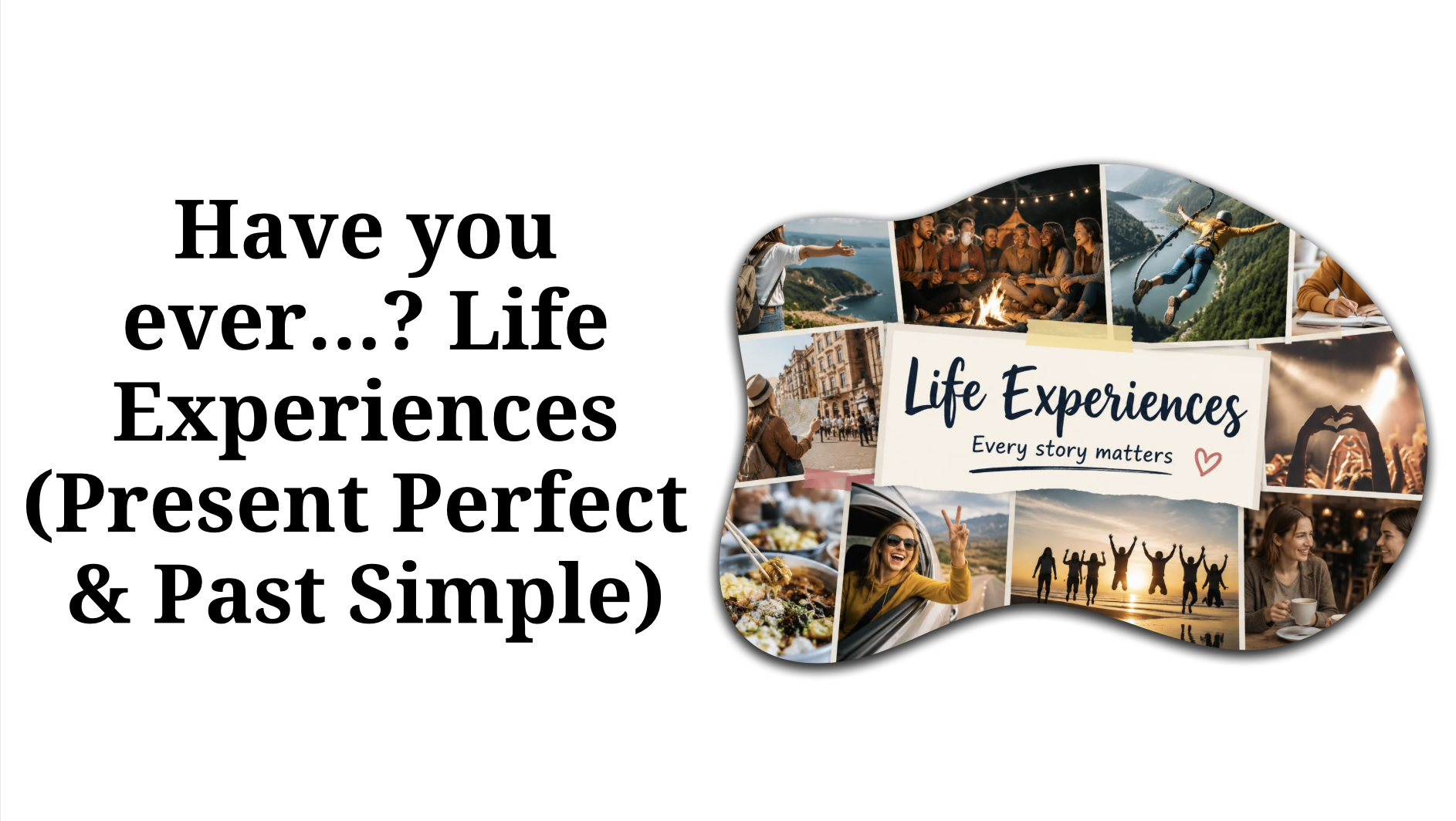
Turn everyday experiences into engaging conversation practice! Explore the difference between Present Perfect and Past Simple through a “Have you ever…?” experience challenge, analyse a dialogue between two contrasting personalities, and practise asking follow-up questions to uncover more details. With speaking tasks, real-life reactions, and personalised storytelling, learners build the confidence to talk about their life experiences naturally and fluently.
FREE
Explore how different generations view work, effort, and loyalty in today’s workplace. Engage with authentic videos and comments about Gen Z and changing work expectations. Practise idiomatic expressions. Through discussions, debates, and roleplays, learners critically explore whether younger employees are “entitled” or simply reacting to a changing labour market shaped by layoffs, insecurity, and shifting values.
FREE
Explore a controversial UK public health law and what it reveals about freedom, responsibility, and government control. Students watch a BBC News report on the new smoking ban, analyse its aims and implications, and debate whether such policies protect society or go too far. Along the way, they master advanced vocabulary (crack down on, turn a blind eye to, take a toll on, etc.) before putting it all into action in a dynamic roleplay and debate.